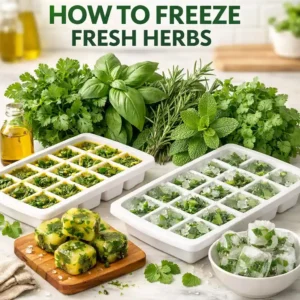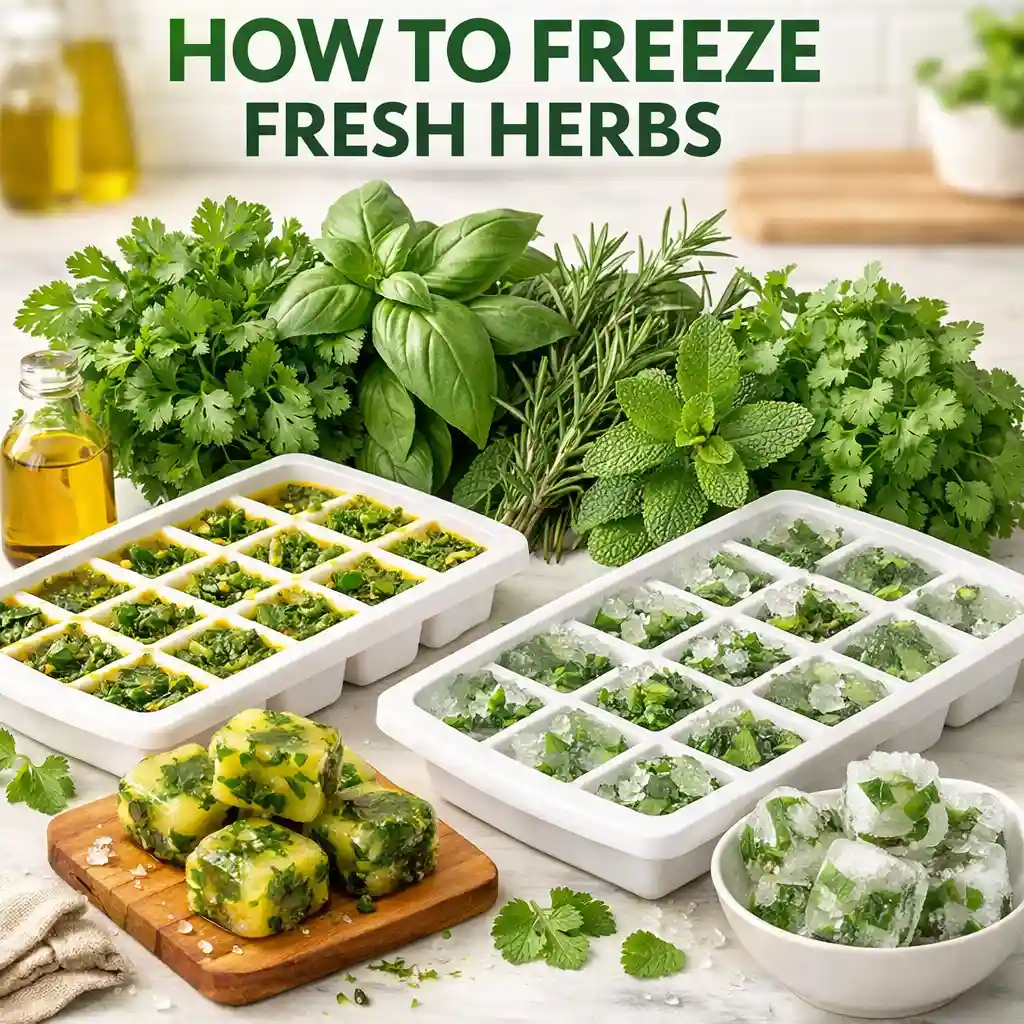
Last summer, I stepped into my little kitchen with a bundle of parsley and basil from the farmers’ market. They smelled fresh and green, and I remember thinking, “I don’t want this goodness to go to waste.” That’s when I started learning how to freeze fresh herbs the right way. Since then, I’ve kept small jars and herb cubes ready in my freezer, and it has truly changed the way I cook simple meals at home.
If you’ve ever bought fresh herbs and watched them wilt in the fridge a few days later, this guide is for you. In this article, I’ll walk you through how to freeze fresh herbs step by step so you can keep their flavor for months. Whether you grow basil in your backyard, buy rosemary for a special dinner, or simply want to store leftover cilantro, you’ll learn easy and practical methods that work in a normal home kitchen.
We’ll talk about the best herbs to freeze, whether it’s better to freeze fresh herbs in water or oil, how long herbs last in the freezer, and even if you can freeze herbs without blanching. I’ll also share simple storage tips, cooking ideas, and common mistakes to avoid. From my own kitchen experience, freezing herbs is one of the simplest ways to save money, reduce waste, and always have flavor ready when you need it.
If you enjoy practical kitchen tips, you can also learn more about other basic cooking skills in our guide on how-to-boil-eggs-perfectly, which pairs beautifully with using frozen herbs in everyday meals.
Let’s begin with why learning how to freeze fresh herbs really matters and how it can make your daily cooking easier and more enjoyable.
Why Learning How to Freeze Fresh Herbs Matters
When I first started learning how to freeze fresh herbs, I was simply trying to stop wasting food. Fresh basil, parsley, and cilantro look beautiful on the counter, yet within days they can turn limp and brown. So instead of tossing them out, I decided to understand how to freeze fresh herbs properly and keep their bright flavor alive. Once you know how to freeze fresh herbs, you’ll notice your meals taste just as vibrant weeks later.
The Problem With Fresh Herbs Spoiling Too Fast
Fresh herbs contain a lot of moisture, which means they spoil quickly in the refrigerator. Even when wrapped in paper towels or stored in jars of water, they don’t last long. That’s exactly why learning how to freeze fresh herbs is such a helpful kitchen skill. By knowing how to freeze fresh herbs, you slow down spoilage and protect their natural oils. As a result, you save money and avoid waste.
In my experience, once you understand how to freeze fresh herbs, you stop feeling rushed to use them all at once. Instead, you cook calmly, knowing you have frozen herb cubes ready anytime. If you enjoy cooking with herbs in soups and simple meals, you might also enjoy our comforting ideas here: easy-soup-recipes-for-cold-nights.
Benefits of Freezing Fresh Herbs for Everyday Cooking
There are several reasons why how to freeze fresh herbs becomes a game-changer in daily cooking. First, frozen herbs are convenient. You can drop them straight into hot soups, stews, or sauces. Second, when you learn how to freeze fresh herbs in small portions, you control flavor without waste. Third, understanding how to freeze fresh herbs helps you preserve seasonal garden harvests.
Even though frozen herbs may look softer after thawing, their taste stays strong. That’s why I always recommend learning how to freeze fresh herbs if you cook at home regularly. Over time, this simple habit keeps your freezer stocked with ready-to-use flavor, making everyday meals easier and more enjoyable.
Best Herbs to Freeze and What to Expect
After I understood the basics of how to freeze fresh herbs, my next question was simple: which herbs actually freeze well? Not all herbs behave the same way in cold storage. So before you start filling ice cube trays, it helps to know what to expect. When you learn how to freeze fresh herbs properly, you also learn which types keep their flavor and which may change in texture.
Soft Herbs vs. Hardy Herbs: What Freezes Best?
Soft herbs like basil, parsley, cilantro, dill, and mint are excellent candidates once you understand how to freeze fresh herbs the right way. These leafy herbs may darken slightly after freezing, yet their flavor usually stays strong. That’s why many home cooks prefer how to freeze fresh herbs in chopped form, ready to toss into soups or sauces.
On the other hand, hardy herbs such as rosemary, thyme, and oregano have firmer stems and lower moisture content. Because of this, how to freeze fresh herbs like rosemary is often even easier. You can freeze the sprigs whole or chopped. While the leaves may become softer after thawing, they still work beautifully in cooked dishes.
Can You Freeze Fresh Rosemary in Olive Oil?
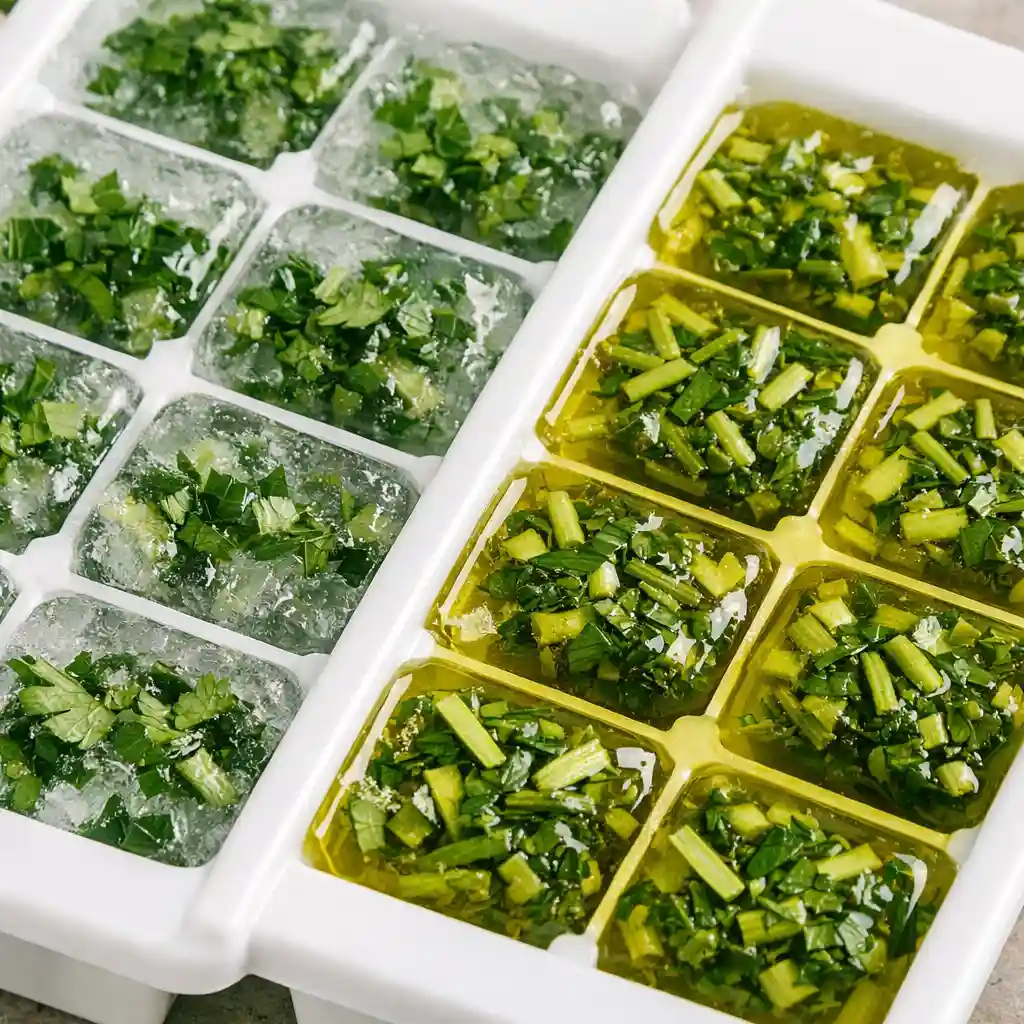
Yes, you can freeze fresh rosemary in olive oil, and this method fits perfectly into learning how to freeze fresh herbs for cooking. In fact, many people who practice how to freeze fresh herbs prefer oil because it protects flavor and prevents freezer burn. Simply chop the rosemary, place it in an ice cube tray, and cover it with olive oil before freezing.
However, remember that frozen herbs in oil are best used for cooking, not for raw dishes. When thinking about how to freeze fresh herbs safely, always store the cubes in airtight containers and label them clearly. From my kitchen experience, this approach makes weeknight meals faster and more flavorful without extra prep work.
How to Freeze Fresh Herbs Step-by-Step
Once you know which herbs freeze well, the next step is learning how to freeze fresh herbs correctly from start to finish. While it may sound simple, small details make a big difference in flavor and texture. In my kitchen, I’ve found that understanding how to freeze fresh herbs in a careful, organized way keeps them tasting close to freshly picked.
Washing, Drying, and Preparing Herbs Properly
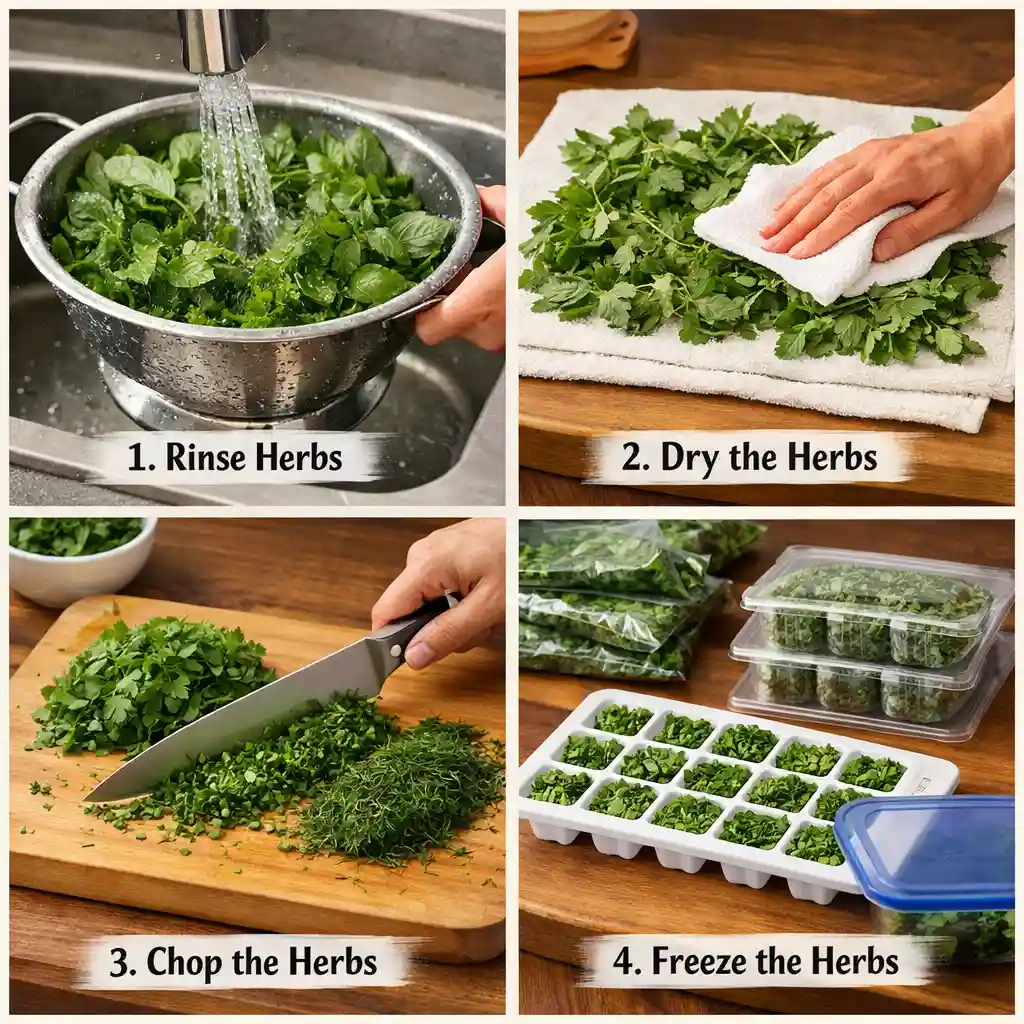
Before you begin how to freeze fresh herbs, always wash them gently under cool running water. This removes dirt and tiny debris. However, just as important as washing is drying. If you skip this step while practicing how to freeze fresh herbs, extra moisture can form ice crystals and damage the leaves.
After rinsing, lay the herbs on a clean towel and pat them dry. Sometimes I let them air-dry for an hour to remove hidden moisture. When you approach how to freeze fresh herbs with patience, you protect both flavor and color. Once fully dry, remove thick stems if needed, especially for herbs like basil or parsley.
Chopping vs. Freezing Whole Leaves: Which Is Better?
When deciding how to freeze fresh herbs, you can either freeze them whole or chop them first. Whole leaves work well for hardy herbs like rosemary or thyme. Still, if you cook often, chopping makes how to freeze fresh herbs more practical because you can use small portions quickly.
Personally, I prefer chopping softer herbs before learning how to freeze fresh herbs in batches. I spread the chopped herbs on a tray for a short pre-freeze, then transfer them into freezer bags. This method prevents clumping and makes it easier to grab just what I need. In the end, how to freeze fresh herbs depends on how you plan to cook with them, yet careful prep always leads to better results.
Is It Better to Freeze Fresh Herbs in Water or Oil?
As I continued learning how to freeze fresh herbs, I realized that choosing between water and oil can change how you use them later. Both methods work well, yet each one serves a different purpose in the kitchen. So when you’re deciding how to freeze fresh herbs for your meals, it helps to think about how you plan to cook.
Freezing Herbs in Water: When It Works Best
If you want a simple and clean method, freezing in water is a great place to start. When practicing how to freeze fresh herbs this way, you chop the herbs, place them into an ice cube tray, and cover them with water before freezing. Once solid, transfer the cubes into freezer-safe bags.
This method keeps flavors fresh and works especially well for soups, stews, and sauces. Because water freezes firmly, it protects delicate leaves like cilantro or parsley. In my experience, how to freeze fresh herbs in water is ideal if you want neutral cubes that blend easily into different dishes without adding extra fat.
Freezing Herbs in Olive Oil: Flavor and Cooking Benefits
On the other hand, freezing in olive oil adds richness right from the start. When I first tried how to freeze fresh herbs in oil, I loved how convenient it felt. You simply chop the herbs, spoon them into an ice cube tray, and pour olive oil over the top. After freezing, each cube becomes a ready-to-cook flavor booster.
This approach works beautifully for sautéed vegetables, roasted chicken, or pasta dishes. If you often cook Mediterranean-style meals, you might also enjoy pairing these herb cubes with ideas from mediterranean-diet-recipes/. In that case, learning how to freeze fresh herbs in oil makes weeknight dinners quicker and more flavorful.
So, is it better to freeze fresh herbs in water or oil? Honestly, it depends on your cooking style. If you want flexibility, choose water. If you prefer built-in flavor, choose oil. Either way, once you understand how to freeze fresh herbs using both methods, your freezer becomes a small treasure chest of ready-made freshness.
Can You Freeze Herbs Without Blanching?
At one point, I wondered if blanching was required when learning how to freeze fresh herbs. After trying both ways, I found that blanching is optional for most kitchen herbs. In fact, for many home cooks, how to freeze fresh herbs without blanching is simpler and still gives great results. The key is choosing the right herbs and preparing them properly before freezing.
What Blanching Does to Herbs
Blanching means dipping herbs briefly in boiling water, then cooling them quickly in ice water. This step can help preserve color and slow enzyme activity. However, when practicing how to freeze fresh herbs at home, blanching is usually unnecessary for soft herbs like parsley, cilantro, or dill.
Because herbs are often used in cooked dishes, slight texture changes after freezing are not a big issue. From my experience, understanding how to freeze fresh herbs without blanching saves time while keeping flavor strong. As long as the herbs are clean and fully dry, you can freeze them directly.
Which Herbs Can Be Frozen Without Blanching?
Most common kitchen herbs can go straight into the freezer without any heat treatment. Basil, mint, chives, oregano, and rosemary all respond well when you follow careful steps for how to freeze fresh herbs. Simply wash, dry, chop if desired, and freeze using water, oil, or freezer bags.
That said, if you grow herbs in your garden and want to preserve their bright green color, you may experiment with blanching. Still, for everyday cooking, learning how to freeze fresh herbs without extra steps makes the process more practical. In the end, freezing herbs should feel easy and manageable, not complicated.
Storage Methods for Frozen Herbs
Once you feel confident about how to freeze fresh herbs, proper storage becomes the next important step. Even if you prepare them carefully, poor storage can affect flavor over time. That’s why understanding how to freeze fresh herbs also means knowing how to protect them from air, moisture, and freezer burn.
Using Ice Cube Trays for Portion Control
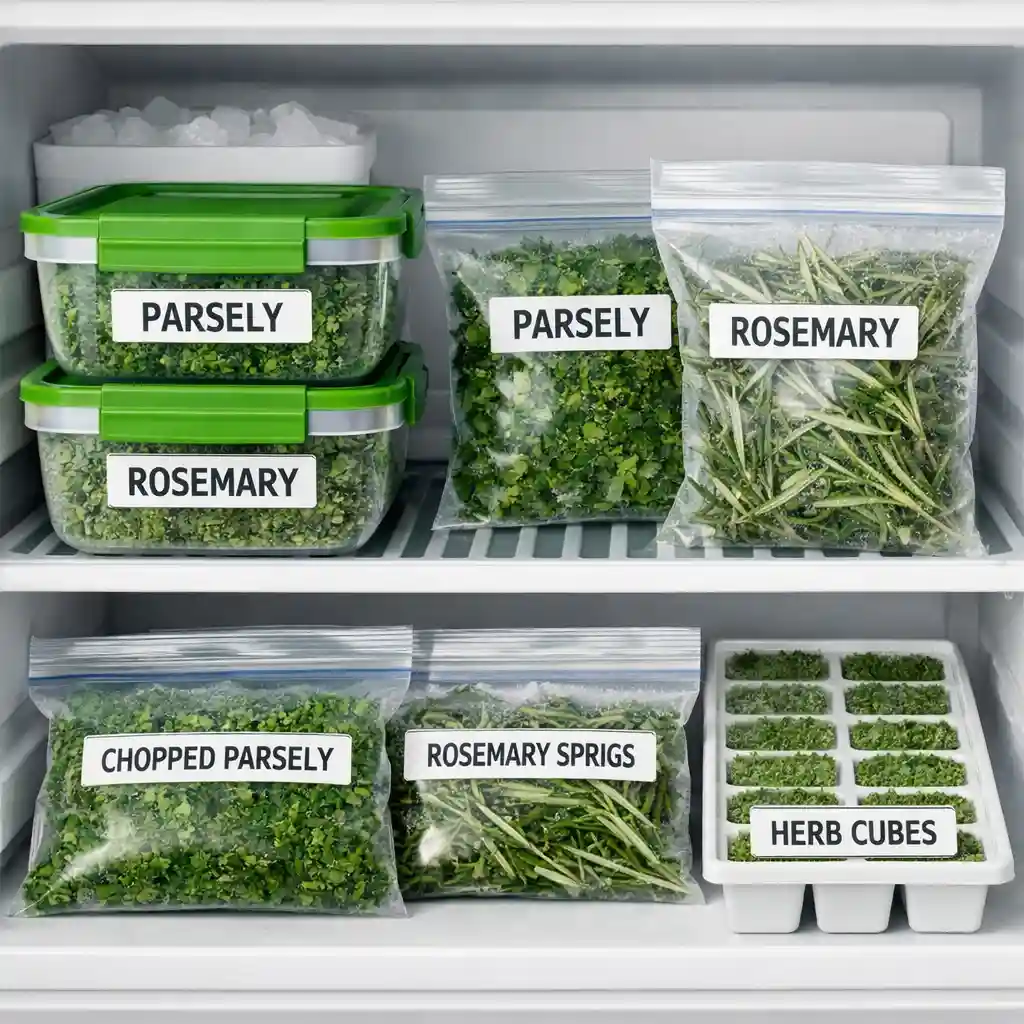
One of the simplest methods I use while practicing how to freeze fresh herbs is the ice cube tray technique. After chopping the herbs and covering them with water or olive oil, I freeze them in small portions. Once solid, I transfer the cubes into labeled freezer bags.
This method makes how to freeze fresh herbs extremely practical because each cube equals one small serving. So instead of thawing a large batch, you just grab what you need. It’s especially helpful for soups, sauces, and stews where frozen herbs melt directly into the dish. If you enjoy adding herbs to comforting meals, you might also like these ideas: matzo-ball-soup-recipe.
Freezer Bags, Airtight Containers, and Labeling Tips
Another reliable way to manage how to freeze fresh herbs is using freezer-safe bags or airtight containers. After pre-freezing chopped herbs on a tray, you can store them flat in bags. This prevents clumping and makes it easier to measure portions later.
Labeling is just as important. Whenever I practice how to freeze fresh herbs, I always write the herb name and the date on the bag. Over time, this habit keeps the freezer organized and avoids confusion. In the end, learning how to freeze fresh herbs properly is not only about freezing itself but also about storing them in a way that preserves flavor and keeps your kitchen routine simple.
How Long Will Herbs Last in the Freezer?
The first time I tried how to freeze fresh herbs, I remember opening my freezer weeks later and wondering, “Are these still good?” That small moment taught me that freezing is only half the story. Knowing how long herbs last is just as important as learning how to freeze fresh herbs in the first place.
Freezer Shelf Life by Herb Type
In general, most herbs stored properly will keep good flavor for about 6 to 12 months. However, their strongest taste usually shines within the first six months. When you practice how to freeze fresh herbs using airtight containers or sealed freezer bags, you protect their natural oils and extend their shelf life.
Soft herbs like basil, parsley, and cilantro may lose some color over time, yet their flavor often remains useful for cooked dishes. Hardy herbs such as rosemary and thyme tend to hold up even better. From my experience, once you understand how to freeze fresh herbs with care, you’ll notice that properly stored cubes still bring bright flavor to soups and sauces months later.
Signs Your Frozen Herbs Should Be Discarded
Even though freezing slows spoilage, it doesn’t stop time completely. If you see heavy frost buildup, grayish color changes, or a dull smell, it may be time to let them go. That’s why learning how to freeze fresh herbs also includes checking them occasionally for quality.
I like to label each batch with the date because it helps me rotate older herbs forward. When you stay organized while practicing how to freeze fresh herbs, you avoid waste and keep flavors fresh. In the end, freezing herbs is about convenience, but paying attention to storage time makes the difference between average and truly flavorful cooking.
Cooking With Frozen Herbs
One evening, after a long day, I pulled a small cube from the freezer and dropped it straight into a simmering pot of soup. That simple habit reminded me why learning how to freeze fresh herbs has been so helpful in my kitchen. Instead of chopping herbs at the last minute, I already had flavor ready to go.
When to Add Frozen Herbs to Soups, Stews, and Sauces
Timing matters when cooking with frozen herbs. Because the texture softens after freezing, they work best in hot dishes rather than fresh salads. Once you understand how to freeze fresh herbs properly, you can add them directly to soups, stews, sauces, or sautéed vegetables without thawing.
I usually stir frozen parsley or cilantro into soups during the last few minutes of cooking. Meanwhile, rosemary or thyme can go in earlier so their flavor gently infuses the dish. Since you’ve taken the time to learn how to freeze fresh herbs correctly, using them becomes effortless and practical.
Do Frozen Herbs Taste as Good as Fresh?
This is a common question. While frozen herbs may not look as firm as fresh ones, their flavor remains surprisingly strong. From my experience, once you master how to freeze fresh herbs, you’ll notice that cooked meals still taste bright and aromatic.
Of course, for garnishing or raw dishes, fresh herbs are still better. However, for everyday cooking, understanding how to freeze fresh herbs means you’ll rarely run out of flavor. It turns busy weeknights into smoother, more relaxed cooking moments—and that alone makes the effort worthwhile.
Common Mistakes When Freezing Fresh Herbs
When I first began practicing how to freeze fresh herbs, I made a few simple mistakes that affected flavor and texture. Over time, I realized that freezing herbs is easy, yet small details truly matter. So if you’re learning how to freeze fresh herbs for the first time, avoiding these common errors will save you effort and keep your herbs tasting fresh.
Skipping the Drying Step
One of the biggest mistakes in how to freeze fresh herbs is not drying them properly after washing. Even a little surface water can form ice crystals, which damage delicate leaves. As a result, the herbs may turn mushy or lose some flavor.
Now, whenever I prepare a batch, I gently pat the herbs dry and let them air-dry before freezing. This extra patience makes a noticeable difference. If you want consistent results while mastering how to freeze fresh herbs, never rush the drying step.
Overpacking or Improper Storage
Another issue I encountered while learning how to freeze fresh herbs was overfilling containers. When herbs are tightly packed without airflow control, freezer burn can develop more quickly. Instead, I freeze them in small, measured portions and transfer them into labeled, airtight bags.
It also helps to remove as much air as possible before sealing. Once you understand how to freeze fresh herbs with proper storage habits, your freezer stays organized and your herbs keep their flavor longer. If you enjoy practical kitchen preparation tips like this, you might also find inspiration in https://slimixir.com/low-calorie-recipe-swaps/, where simple changes make everyday cooking easier.
In the end, learning how to freeze fresh herbs is about building small, smart habits. When you avoid these common mistakes, freezing becomes a dependable way to preserve garden herbs and reduce food waste throughout the year.
Frequently Asked Questions About Freezing Fresh Herbs
Over time, many readers have asked me practical questions about how to freeze fresh herbs. I remember having the same doubts when I first started. So here are clear, honest answers based on real kitchen experience, not complicated techniques.
Is it better to freeze fresh herbs in water or oil?
When deciding how to freeze fresh herbs, both water and oil work well, but they serve different needs. Water is neutral, so it’s perfect for soups, stews, and broths. Oil, especially olive oil, adds richness and works beautifully for sautéing or roasting. From my experience, if you cook a variety of dishes, learning how to freeze fresh herbs using both methods gives you more flexibility in the kitchen.
How long will herbs last in the freezer?
If you practice how to freeze fresh herbs with proper drying and airtight storage, they usually keep good flavor for 6 to 12 months. However, for the best taste, I try to use them within six months. Labeling each batch helps a lot. Once you understand how to freeze fresh herbs carefully, you’ll notice they stay fragrant and useful for many months.
Can you freeze herbs without blanching?
Yes, in most cases you can. While blanching may help preserve bright color, it isn’t required for everyday cooking. When I focus on how to freeze fresh herbs simply, I skip blanching and go straight to washing, drying, and freezing. For home cooks, this approach saves time and still keeps flavor strong.
Can you freeze fresh rosemary in olive oil?
Absolutely. In fact, rosemary freezes very well because it’s a hardy herb. When applying how to freeze fresh herbs to rosemary, I often chop it and freeze it in olive oil cubes. These cubes are wonderful for roasted vegetables or baked chicken. As long as you store them properly, this method makes cooking both easy and flavorful.
Freezing herbs may seem like a small kitchen habit, yet once you truly learn how to freeze fresh herbs the right way, it becomes one of the simplest ways to preserve freshness all year.
Conclusion: Keep Fresh Herbs Ready All Year
Looking back, learning how to freeze fresh herbs has been one of the simplest kitchen habits that truly made a difference for me. Instead of watching basil or parsley wilt in the fridge, I now store small portions that are ready whenever I need them. Once you understand how to freeze fresh herbs properly, you gain control over both flavor and food waste.
Throughout this guide, we’ve covered the full process of how to freeze fresh herbs, from washing and drying to choosing between water or olive oil. We also discussed how long frozen herbs last, whether blanching is necessary, and how to avoid common storage mistakes. Step by step, how to freeze fresh herbs becomes less intimidating and more like a natural part of weekly meal prep.
If you cook often, I truly encourage you to try how to freeze fresh herbs this week. Start small. Freeze one batch of parsley or rosemary and see how convenient it feels. Over time, your freezer will hold a collection of ready-to-use flavor that makes everyday meals smoother and more enjoyable.
For more simple kitchen inspiration and fresh ideas, feel free to connect with us on Facebook and discover visual recipe ideas on Pinterest. Cooking should feel calm, practical, and rewarding—and learning how to freeze fresh herbs is a small step that brings lasting benefits.